
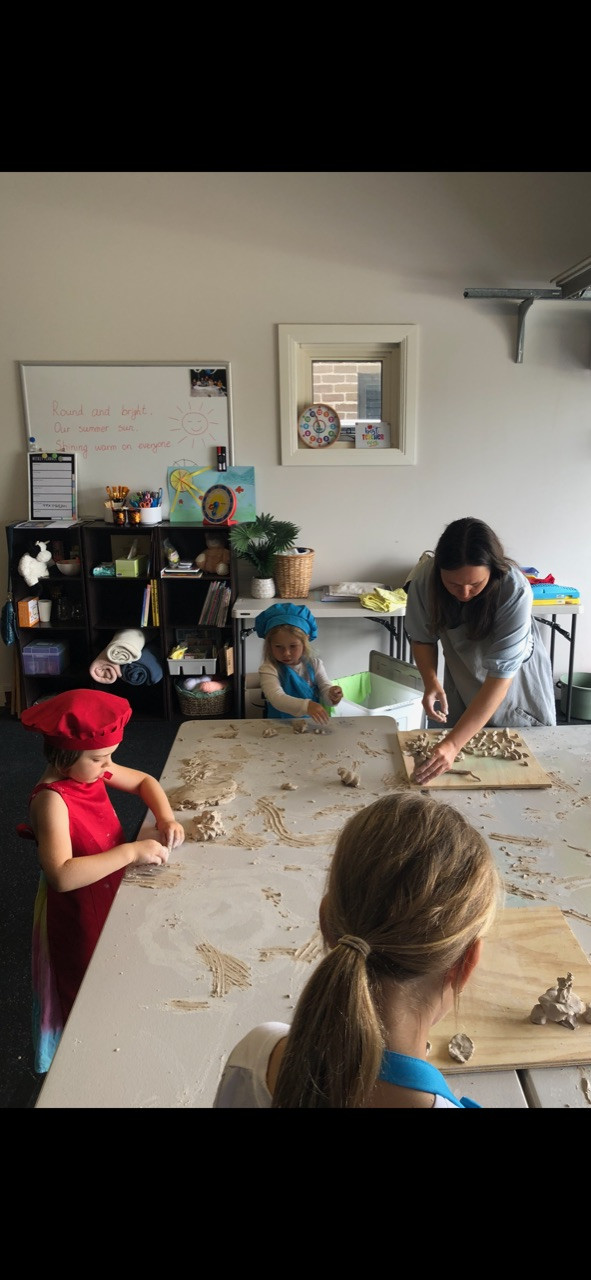
The children will be creating using clay and their imaginations, while being guided by the Steiner teacher.
This is a great lesson for a child to connect with their inner self, learn patience and control.
There will also be activities before and after the clay lesson, where the children will first connect and come together and at the end they will reflect on the lesson.
Pottery/Clay work
Early Stage 1 (Kindergarten)CAE‑VIS‑01Experiments with and identifies ways materials and techniques are used to represent subject matter and ideas in artworks.→ Suitable when younger students start with exploratory clay play (pinching, shaping, textures).Stage 1 (Years 1–2)CA1‑VIS‑01Makes artworks using materials and techniques to represent subject matter and ideas, and describes ways artists convey ideas in artworks.→ Aligned to students using clay with purpose — shaping forms to show meaning and talking about their decisions.Stage 2 (Years 3–4)CA2‑VIS‑01Makes artworks using art forms to represent subject matter and ideas, and describes ways artists convey ideas about their world to audiences through artworks.→ For clay projects connected to personal or cultural themes (e.g., storytelling sculptures).Stage 3 (Years 5-6)Making (CA3‑VIS‑01 & CA3‑VIS‑03): Students sculpt animals, objects, or abstract forms using clay, experimenting with shapes, textures, and techniques.Reflecting (CA3‑VIS‑02 & CA3‑VIS‑04): Students describe how their clay work communicates an idea or feeling; they analyse other artists’ sculptures or classmates’ work.Refining (CA3‑VIS‑03 & CA3‑VIS‑05): Students improve their pieces based on feedback or self-reflection, experimenting with additional textures, surfaces, or details.